
Stay in the loop on new artists and teaching resources.
We add new artists and curriculum materials regularly. Join our list and we'll let you know when something new is a match for your classroom.
Africa has always been a continent rich with diverse cultural traditions and musical styles...»
Africa has always been a continent rich with diverse cultural traditions and musical styles. The slave trade in the U.S. and Caribbean tore many Africans from their families and homes, forcing them across the dangerous waters of the Atlantic. Despite these tragic circumstances, enslaved Africans were able to hold on to many important parts of their musical and cultural traditions. These traditions included drumming, dancing and spiritual songs passed down through the generations. In America, these cultural traditions changed over time to include Christian spiritual stories and ideas. Although the slaveholders rarely allowed enslaved people to gather, they often did accept coming together for Christian worship. There, against the cruelty of slavery, the enslaved people created communities, shared ideas, lifted spirits and brought into being Black gospel music. Gospel also came from a style of singing called Spirituals. Spirituals are often sung in a “call and response” style, meaning that a verse is first sung by a leader and then repeated or answered by a larger group of singers.
When many Black communities migrated from the rural areas of the South to cities in the 1900s, they carried their religious culture with them. In cities like Chicago, Black gospel music developed alongside other musical styles such as ragtime, blues and jazz. Today, Black gospel music takes many forms—from small group singing to large choirs. The energy and rhythm of the music is heard not only within churches, but in concert halls and in styles like R&B, Hip-hop and other popular music.
Africa has always been a continent rich with diverse cultural traditions and musical styles. The slave trade in the U.S. and Caribbean tore many Africans from their families and homes, forcing them across the dangerous waters of the Atlantic. Despite these tragic circumstances, enslaved Africans were able to hold on to many important parts of their musical and cultural traditions. These traditions included drumming, dancing and spiritual songs passed down through the generations. In America, these cultural traditions changed over time to include Christian spiritual stories and ideas. Although the slaveholders rarely allowed enslaved people to gather, they often did accept coming together for Christian worship. There, against the cruelty of slavery, the enslaved people created communities, shared ideas, lifted spirits and brought into being Black gospel music. Gospel also came from a style of singing called Spirituals. Spirituals are often sung in a “call and response” style, meaning that a verse is first sung by a leader and then repeated or answered by a larger group of singers.
When many Black communities migrated from the rural areas of the South to cities in the 1900s, they carried their religious culture with them. In cities like Chicago, Black gospel music developed alongside other musical styles such as ragtime, blues and jazz. Today, Black gospel music takes many forms—from small group singing to large choirs. The energy and rhythm of the music is heard not only within churches, but in concert halls and in styles like R&B, Hip-hop and other popular music.
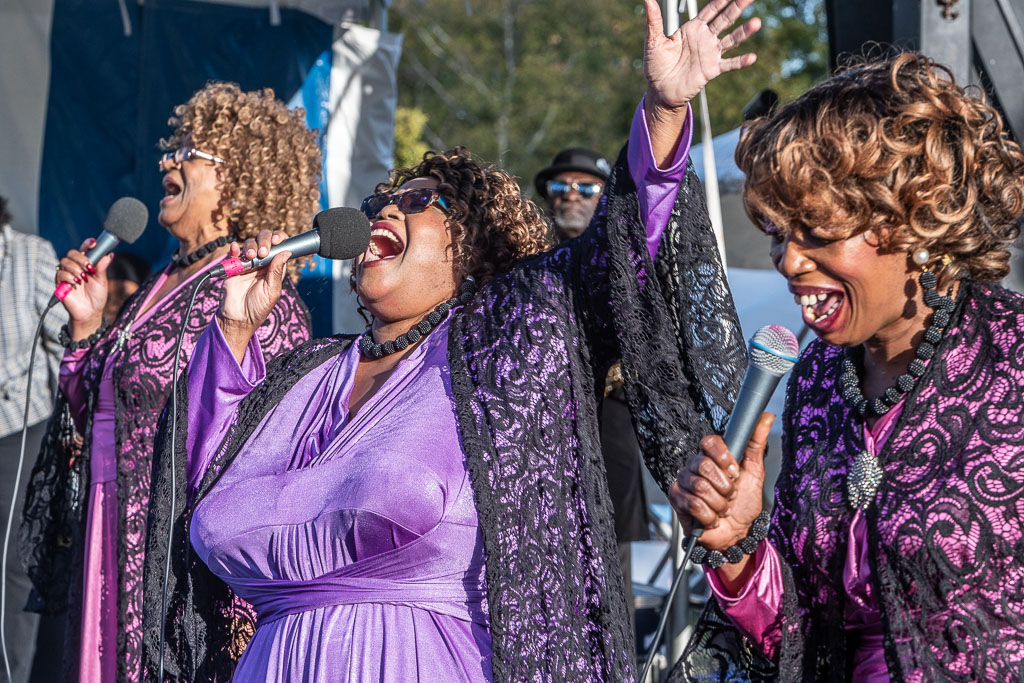
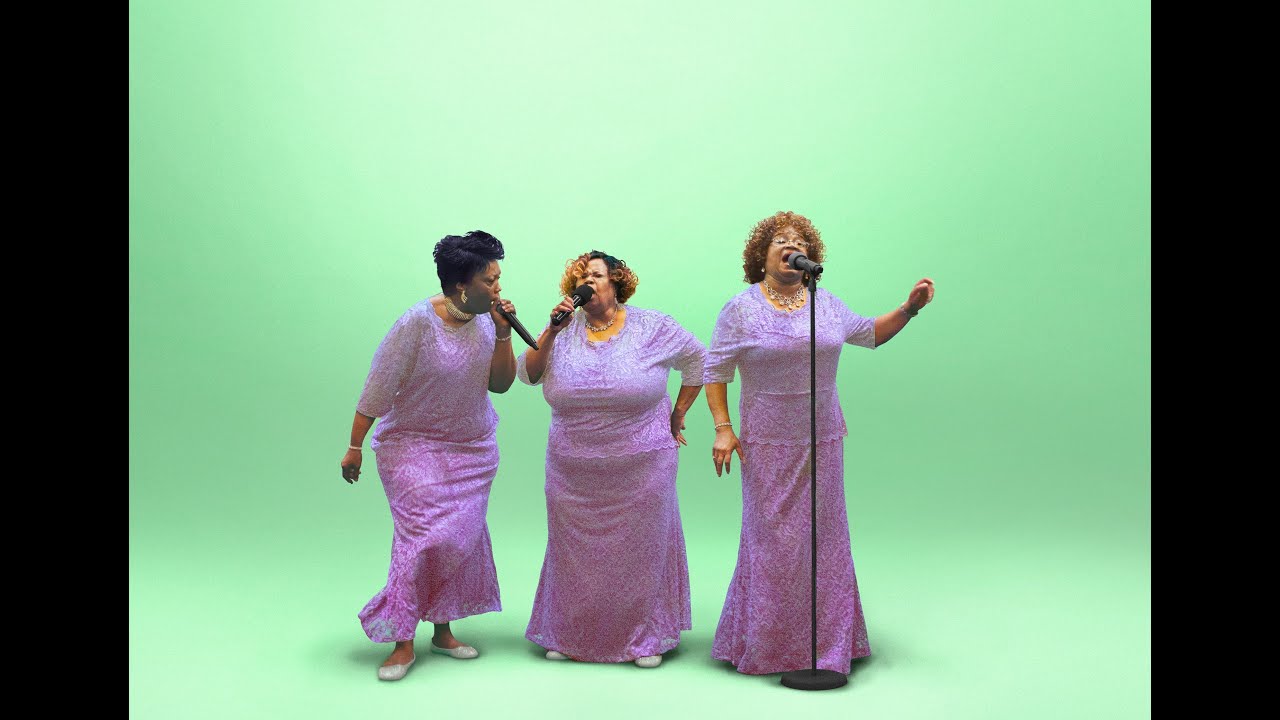
Connected by generations of powerful women tied together through song and strength, the story of the Legendary Ingramettes began more than 60 years ago when "Mama" Maggie Ingram formed this family gospel group...»
Connected by generations of powerful women tied together through song and strength, the story of the Legendary Ingramettes began more than 60 years ago when “Mama” Maggie Ingram formed this family gospel group. Maggie Ingram was born in 1930 on what was still called Mulholland’s Plantation in Coffee County, Georgia, where she worked the cotton and tobacco fields with her parents. Maggie began playing the piano and singing at an early age and developed a great love for gospel music in her community’s church. Finding herself a single mother in 1961, Maggie and her five young children moved to Richmond, Virginia, where she found work in the home of Oliver Hill, an important Civil Rights lawyer who fought for the equality of African Americans to attend the same schools as white students.
Maggie’s family began singing together in their church and soon formed their gospel group “Maggie Ingram and the Ingramettes,” which became one of the most beloved groups in Richmond’s famous gospel scene. In addition to getting record contracts with important gospel labels and performing up and down the East Coast, the Ingramettes began a ministry in prisons and with programs that reunited women inmates with their children and families.
Maggie passed away in 2015, but the group has continued to soar as “The Legendary Ingramettes” with Maggie’s oldest daughter, Almeta Ingram-Miller taking the lead of this family band.
Connected by generations of powerful women tied together through song and strength, the story of the Legendary Ingramettes began more than 60 years ago when “Mama” Maggie Ingram formed this family gospel group. Maggie Ingram was born in 1930 on what was still called Mulholland’s Plantation in Coffee County, Georgia, where she worked the cotton and tobacco fields with her parents. Maggie began playing the piano and singing at an early age and developed a great love for gospel music in her community’s church. Finding herself a single mother in 1961, Maggie and her five young children moved to Richmond, Virginia, where she found work in the home of Oliver Hill, an important Civil Rights lawyer who fought for the equality of African Americans to attend the same schools as white students.
Maggie’s family began singing together in their church and soon formed their gospel group “Maggie Ingram and the Ingramettes,” which became one of the most beloved groups in Richmond’s famous gospel scene. In addition to getting record contracts with important gospel labels and performing up and down the East Coast, the Ingramettes began a ministry in prisons and with programs that reunited women inmates with their children and families.
Maggie passed away in 2015, but the group has continued to soar as “The Legendary Ingramettes” with Maggie’s oldest daughter, Almeta Ingram-Miller taking the lead of this family band.
Richmond is the capital of Virginia and sits along the James River...»
Richmond is the capital of Virginia and sits along the James River. Because of its advantageous position on this river, Richmond has always held great importance. Originally the capital of the Powhatan Indian Tribe, it later became the capital of the Confederacy during the Civil War. After the Civil War, Black Richmond citizens built a successful business and arts community which today remains a cultural center in a city with a majority African American population. Richmond has become famous for its gospel music scene, with the Legendary Ingramettes widely considered the city’s “First Family of Richmond Gospel.” In fact, the Grammy-Award winning artist D’Angelo is the son of a Richmond minister. He names Maggie Ingram and the Ingramettes as one of his most inspiring influences.
Richmond is the capital of Virginia and sits along the James River. Because of its advantageous position on this river, Richmond has always held great importance. Originally the capital of the Powhatan Indian Tribe, it later became the capital of the Confederacy during the Civil War. After the Civil War, Black Richmond citizens built a successful business and arts community which today remains a cultural center in a city with a majority African American population. Richmond has become famous for its gospel music scene, with the Legendary Ingramettes widely considered the city’s “First Family of Richmond Gospel.” In fact, the Grammy-Award winning artist D’Angelo is the son of a Richmond minister. He names Maggie Ingram and the Ingramettes as one of his most inspiring influences.
After viewing The Ingramettes video, before showing it to your class...»
After viewing The Ingramettes video, before showing it to your class:
After viewing The Ingramettes video, before showing it to your class:
Students watch accompanying video about The Ingramettes.
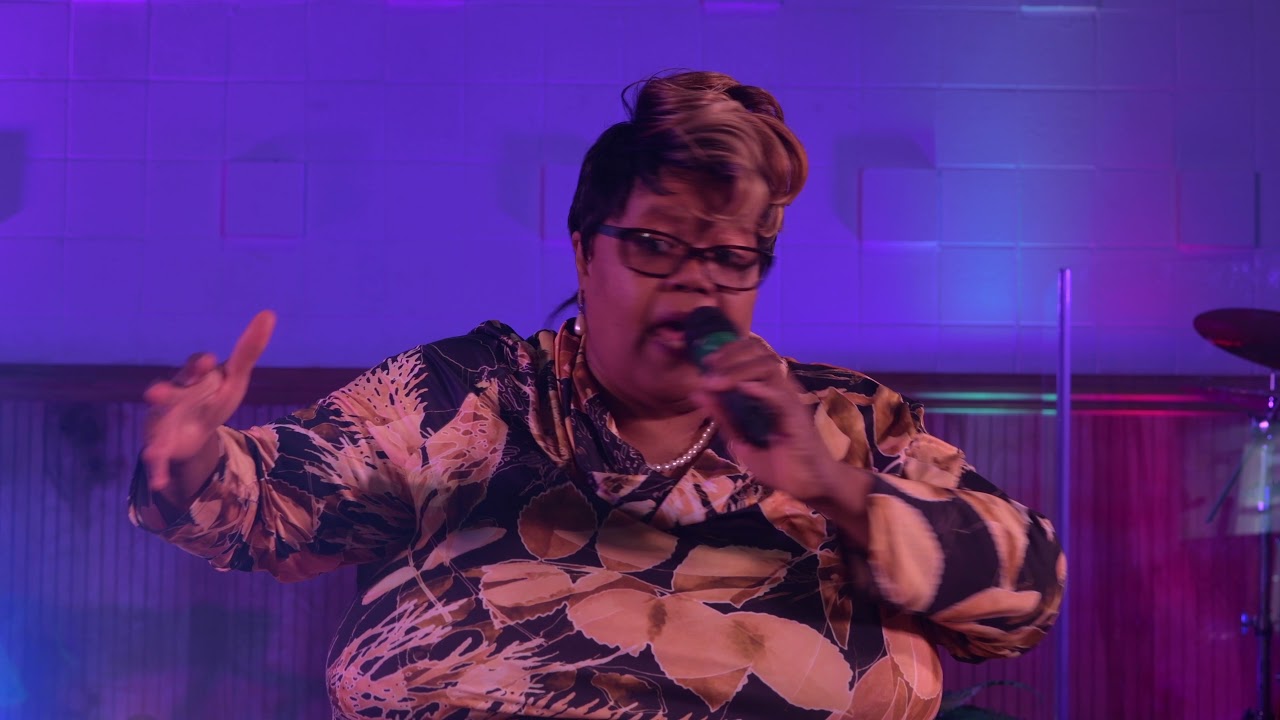
In a small group of 2-4 classmates, share your answers to these questions:
In groups of 2 or 3, write down 3 questions you want to ask the members of The Legendary Ingramettes when you meet them.
Almeta, the leader of the Ingramettes, described the importance of sharing music, lessons, stories and traditions from one generation to the next. Imagine that you were creating a time capsule to store in a safe place that would reflect your family’s past and present to share with future generations. Imagine what music, stories and items you would pack in your time capsule.
Explore the following questions as you think about your life, home, and community:
Write a thank you card to The Legendary Ingramettes—be sure to include something personal about yourself and how it connects to them and their music.
Bring home your completed time capsule worksheet that you completed during class.
Share what items you listed in your time capsule with an adult family member.
Interview that adult to ask what cultural artifacts, music, stories and traditions they would choose to pass down from one generation to the next in their time capsule.
Write down these items to share your family time capsule with your class.
Students watch accompanying video about The Ingramettes.
In a small group of 2-4 classmates, share your answers to these questions:
In groups of 2 or 3, write down 3 questions you want to ask the members of The Legendary Ingramettes when you meet them.
In the video, the Legendary Ingramettes’ leader, Reverend Almeta Ingram-Miller, tells the harrowing story of her family’s journey north to Richmond through pre-Civil Rights South. Clearly it was a tremendous act of courage for Ameta’s mother Maggie to make this journey, and hers is just one of countless acts of courage by individuals, families and communities on our nation’s road to a more just society. In order to summon the strength to take her family on this potentially dangerous and unpredictable journey, Maggie drew strength from her own family’s past triumphs in the face of adversity and the collective acts of courage by her people in the long and difficult road toward equal rights and justice.
Almeta, the leader of the Ingramettes, described the importance of sharing music, lessons, stories and traditions from one generation to the next. That history can offer us grounding and strength. Imagine that you were creating a time capsule to store in a safe place that would reflect your family and communities past and present to share with future generations. Imagine what music, stories, current events and items you would pack in your time capsule that would give you strength.
Imagine yourself as Maggie Ingram in 1961, about to take your family on the journey north from Florida to Virginia in the hopes of a better life. Write a journal entry in anticipation of this potentially perilous journey including references to Civil Rights milestones from 1961 and the years just prior as well as songs of the Civil Rights movement.
Share your stories with the class.
Write a thank you card to The Legendary Ingramettes—be sure to include something personal about yourself and how it connects to them and their music.

Compare and contrast the experience of reading a story, drama, or poem to listening to or viewing an audio, video, or live version of the text, including contrasting what they “see” and “hear” when reading the text to what they perceive when they listen or watch.
Determine the meaning of words and phrases as they are used in a text, including figurative, connotative, and technical meanings.
Write informative/explanatory texts to examine a topic and convey ideas and information clearly.
Conduct short research projects to answer a question, drawing on several sources and refocusing the inquiry when appropriate.
Engage effectively in a range of collaborative discussions (one-on-one, in groups, and teacher-led) with diverse partners on topics and texts, building on others’ ideas and expressing their own clearly.
Review the key ideas expressed and demonstrate understanding of multiple perspectives through reflection and paraphrasing.
Interpret information presented in diverse media and formats (e.g., visually, quantitatively, orally) and explain how it contributes to a topic, text, or issue under study.
Include multimedia components (e.g., graphics, images, music, sound) and visual displays in presentations to clarify information.
Compare and contrast the experience of reading a story, drama, or poem to listening to or viewing an audio, video, or live version of the text, including contrasting what they “see” and “hear” when reading the text to what they perceive when they listen or watch.
Determine the meaning of words and phrases as they are used in a text, including figurative, connotative, and technical meanings.
Write informative/explanatory texts to examine a topic and convey ideas and information clearly.
Conduct short research projects to answer a question, drawing on several sources and refocusing the inquiry when appropriate.
Engage effectively in a range of collaborative discussions (one-on-one, in groups, and teacher-led) with diverse partners on topics and texts, building on others’ ideas and expressing their own clearly.
Review the key ideas expressed and demonstrate understanding of multiple perspectives through reflection and paraphrasing.
Interpret information presented in diverse media and formats (e.g., visually, quantitatively, orally) and explain how it contributes to a topic, text, or issue under study.
Include multimedia components (e.g., graphics, images, music, sound) and visual displays in presentations to clarify information.