
Stay in the loop on new artists and teaching resources.
We add new artists and curriculum materials regularly. Join our list and we'll let you know when something new is a match for your classroom.
Kitchen Dance Music owes its name largely to architectural necessity...»
Kitchen Dance Music owes its name largely to architectural necessity: because Caymanians traditionally lived in easily burned thatched-roof homes, their kitchens were constructed in open-air and semi-enclosed detached structures. Thus, the cooking of meals often became a community-wide event, with much comradery and celebration which often included music. In this unique setting, household kitchen tools, most notably a grater used for coconut and cassava, became the driving percussive foundation paired with cowskin or goatskin drums. Along with the grater, the most defining instrument in kitchen band music is the fiddle, which can be traced back to the British and Irish fiddling traditions brought to the Cayman Islands by its earliest permanent settlers. Since the 1700s, fiddle music has been the centerpiece of Caymanian folk music traditions—and included folk songs telling stories of love, loss and other incidents in the tiny, isolated maritime society known at one time as “the Islands time forgot.” Fiddle-driven dance tunes were conjoined with the pulse of vibrant rhythms that crossed the Atlantic with the enslaved African who were forcibly brought to the Cayman Islands. This blending of African and European heritage is evident in the Caymanian people and their unique traditions including their dialect, foods and dance but perhaps most strongly through their beloved kitchen dance music.
Kitchen Dance Music owes its name largely to architectural necessity: because Caymanians traditionally lived in easily burned thatched-roof homes, their kitchens were constructed in open-air and semi-enclosed detached structures. Thus, the cooking of meals often became a community-wide event, with much comradery and celebration which often included music. In this unique setting, household kitchen tools, most notably a grater used for coconut and cassava, became the driving percussive foundation paired with cowskin or goatskin drums. Along with the grater, the most defining instrument in kitchen band music is the fiddle, which can be traced back to the British and Irish fiddling traditions brought to the Cayman Islands by its earliest permanent settlers. Since the 1700s, fiddle music has been the centerpiece of Caymanian folk music traditions—and included folk songs telling stories of love, loss and other incidents in the tiny, isolated maritime society known at one time as “the Islands time forgot.” Fiddle-driven dance tunes were conjoined with the pulse of vibrant rhythms that crossed the Atlantic with the enslaved African who were forcibly brought to the Cayman Islands. This blending of African and European heritage is evident in the Caymanian people and their unique traditions including their dialect, foods and dance but perhaps most strongly through their beloved kitchen dance music.
Swanky Kitchen Band is on an essential quest to revive the traditional music of the Cayman Islands...»
Swanky Kitchen Band is on an essential quest to revive the traditional music of the Cayman Islands. Set amidst the crystal blue waters of the Caribbean Sea, the three tiny islands are home to Kitchen Dance Music, an infectiously danceable fiddle-driven style. The Kitchen Dance sound, created through a crossroads of European and African influences, nearly disappeared save for the efforts of Swanky Kitchen Band, the last of the Caymanian Kitchen Bands.
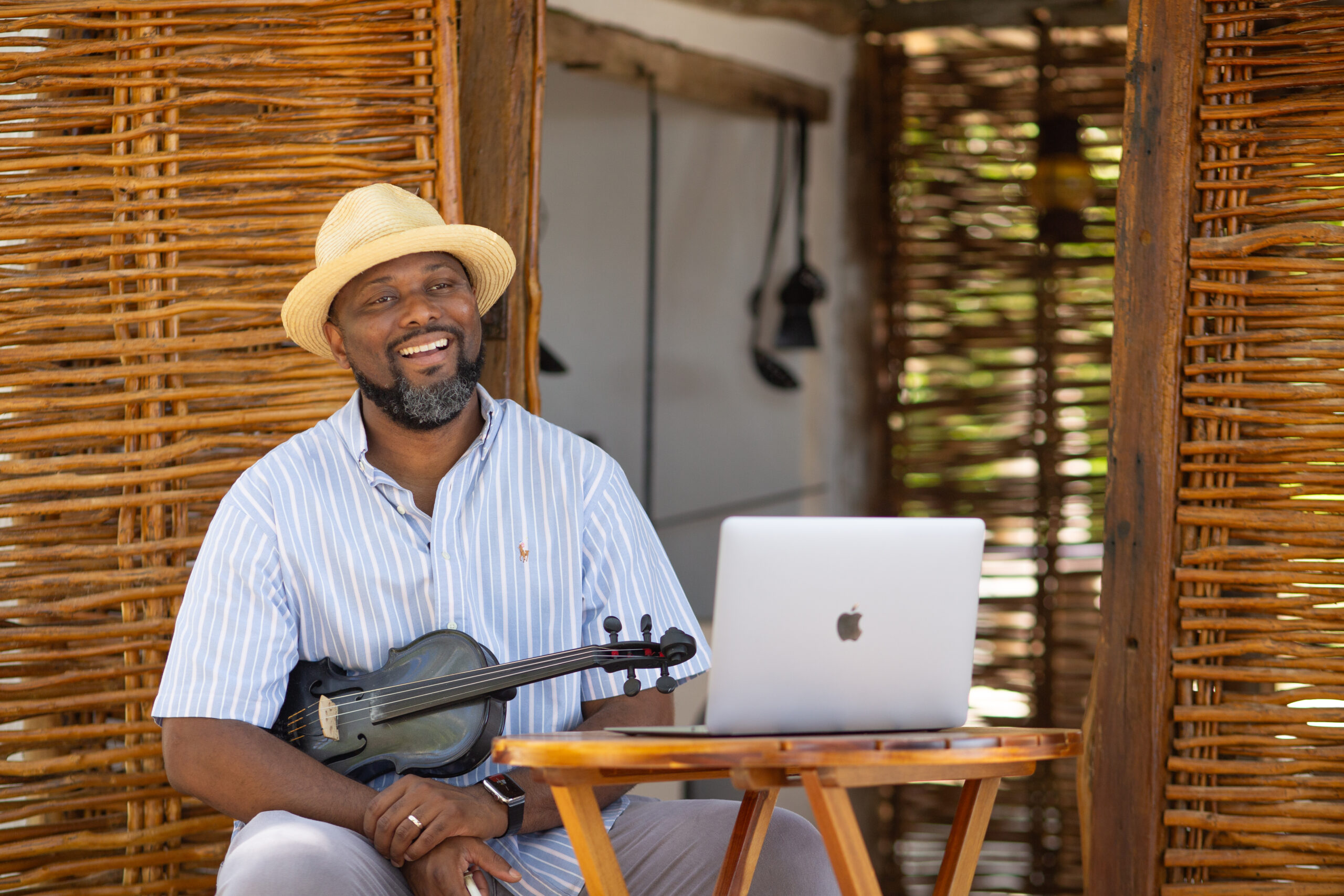
“Swanky,” as the group is known to its loyal fan base, was founded and is led by fiddler and songwriter Samuel Rose at a time when the rapid pace of development and societal change nearly ended the genre. Samuel grew up on the island of Grand Cayman, and first began violin lessons as a child receiving classical training. In his late teens he was encouraged to shift his musical journey in order to preserve the music of his homeland which had become critically endangered. Traditionally performed in community settings, the music was the soundtrack to festivities and gatherings where food, music and community came together. The kitchen dance was led by master fiddlers including the late Radley Gourzong, who performed at the Grand Ole’ Opry in 1987, a surprising feat for a Caribbean fiddler. Sadly, by the time Samuel began to embrace his musical roots, most of the old fiddlers and kitchen band performers had already passed away. Having learned indirectly from previous recordings of old masters, Samuel’s playing reminds us of their legacy and the depth of this unique Caymanian art form. In 2003, Samuel along with guitarist Nicholas Johnson created Swanky Kitchen Band to preserve and revitalize this rapidly disappearing musical art-form.
The core of Kitchen Dance music is the driving sound of the fiddle surrounded by a rhythmic groove created with a snare drum, a grater (like the one you would find in your own kitchen!) played by rubbing a metal brush or comb across the teeth of this indispensable kitchen tool, and a guitar or other stringed instrument. Samuel took these traditional core elements and built out a powerhouse dance band that is now 10-pieces strong including the grater, full drum kit, saxophone, harmonica, electric bass, keyboards, electric guitar and multiple singers. Among the core members of the band are Paula “Ms. P” Scott, a master on the grater who was born from a family of drummers on Grand Cayman’s sister island of Cayman Brac, and Lammie Seymore, a well known Caymanian musicians who founded the wildly popular Memory of Justice Band that dominated the local airwaves in the 1970s and 80s. Together Swanky faithfully honors the traditional kitchen music songs while also contributing their own compositions and infusing more popular and modern dance sounds that attract audiences young and old.
Swanky Kitchen Band is on an essential quest to revive the traditional music of the Cayman Islands. Set amidst the crystal blue waters of the Caribbean Sea, the three tiny islands are home to Kitchen Dance Music, an infectiously danceable fiddle-driven style. The Kitchen Dance sound, created through a crossroads of European and African influences, nearly disappeared save for the efforts of Swanky Kitchen Band, the last of the Caymanian Kitchen Bands.
“Swanky,” as the group is known to its loyal fan base, was founded and is led by fiddler and songwriter Samuel Rose at a time when the rapid pace of development and societal change nearly ended the genre. Samuel grew up on the island of Grand Cayman, and first began violin lessons as a child receiving classical training. In his late teens he was encouraged to shift his musical journey in order to preserve the music of his homeland which had become critically endangered. Traditionally performed in community settings, the music was the soundtrack to festivities and gatherings where food, music and community came together. The kitchen dance was led by master fiddlers including the late Radley Gourzong, who performed at the Grand Ole’ Opry in 1987, a surprising feat for a Caribbean fiddler. Sadly, by the time Samuel began to embrace his musical roots, most of the old fiddlers and kitchen band performers had already passed away. Having learned indirectly from previous recordings of old masters, Samuel’s playing reminds us of their legacy and the depth of this unique Caymanian art form. In 2003, Samuel along with guitarist Nicholas Johnson created Swanky Kitchen Band to preserve and revitalize this rapidly disappearing musical art-form.
The core of Kitchen Dance music is the driving sound of the fiddle surrounded by a rhythmic groove created with a snare drum, a grater (like the one you would find in your own kitchen!) played by rubbing a metal brush or comb across the teeth of this indispensable kitchen tool, and a guitar or other stringed instrument. Samuel took these traditional core elements and built out a powerhouse dance band that is now 10-pieces strong including the grater, full drum kit, saxophone, harmonica, electric bass, keyboards, electric guitar and multiple singers. Among the core members of the band are Paula “Ms. P” Scott, a master on the grater who was born from a family of drummers on Grand Cayman’s sister island of Cayman Brac, and Lammie Seymore, a well known Caymanian musicians who founded the wildly popular Memory of Justice Band that dominated the local airwaves in the 1970s and 80s. Together Swanky faithfully honors the traditional kitchen music songs while also contributing their own compositions and infusing more popular and modern dance sounds that attract audiences young and old.
Unlike most islands in the Caribbean, there is no record of native peoples living on the Cayman Islands before they were first spotted by Christopher Columbus during his final voyage in 1503 after his ship was blown off course...»
Unlike most islands in the Caribbean, there is no record of native peoples living on the Cayman Islands before they were first spotted by Christopher Columbus during his final voyage in 1503 after his ship was blown off course. Columbus first named the islands “Las Tortugas” after the vast number of turtles that swam in its waters. Trade between Europe and the Americas expanded over the next 100 years or so, and the islands were often used as a stopping-off point to catch these abundant sea turtles to feed sailors. Those turtles, once so dense in numbers that it was said they filled the seas and stopped ships from moving, were soon hunted to near extinction. It was the first of many times that the pressures from trade would impact the islands now called the Caymans.
The Cayman Islands is made up of three Islands: Grand Cayman, Cayman Brac and Little Cayman. Until the early 1700s, the islands were sparsely inhabited, mainly used by ships to restock food and wood. Their relative isolation made them ideal for pirates, including the legendary Blackbeard, one of the most famous pirates of them all, who frequented the Caymans until settlements were created. When the first British settlers arrived in 1730 they brought with them peoples forcibly taken from Africa. The islands became part of the British Empire and by 1802 the largest of the islands, Grand Cayman, had only 902 people living there, with over half of them enslaved. In 1833, slavery was officially abolished on the Islands.
Today, the Caymans are a self-governing territory of Great Britain with its own Parliament. The population is a fraction of what you would find in a major U.S city (fewer than 100,000 people). If it were an independent nation, it would be the 11th smallest country by population in the world! Its small size helps make its local culture and traditions unique but also in danger of being easily lost. Its current population, while still tiny, is massive compared to what it was in 1960, when the total population of the Caymans was fewer than 10,000. At that time, the islands were home to small farmers, fisherman, boat-builders and net menders, many of whom were connected to the original families that settled the Islands in the 1700s. The historically low population and longtime lack of industry led to a relatively peaceful place where people were forced to live side by side and share their resources and traditions. These conditions led to a blending of ideas and peoples—a process known as creolization. The racial tensions felt in other parts of the Caribbean are not nearly as present in the Caymans for this reason.
In more recent years, the country has become a force in international banking as it has developed a robust and growing tourism industry, leading to an explosion in the country’s population and wealth. The islands continue to attract new residents, and the average household income is higher than most other countries in the world, resulting in Caymanian residents enjoying the highest standard of living in the Caribbean. This increased population, tourism and wealth has come at a cost, however, as they have caused the local culture to be endangered and the land, once passed down through the generations, to be sold off rapidly. In response to this crisis, the Caymanian government has recently dedicated renewed energy towards preserving and celebrating its cultural traditions, with artists such as Swanky serving as their greatest cultural ambassadors and guardians.
Unlike most islands in the Caribbean, there is no record of native peoples living on the Cayman Islands before they were first spotted by Christopher Columbus during his final voyage in 1503 after his ship was blown off course. Columbus first named the islands “Las Tortugas” after the vast number of turtles that swam in its waters. Trade between Europe and the Americas expanded over the next 100 years or so, and the islands were often used as a stopping-off point to catch these abundant sea turtles to feed sailors. Those turtles, once so dense in numbers that it was said they filled the seas and stopped ships from moving, were soon hunted to near extinction. It was the first of many times that the pressures from trade would impact the islands now called the Caymans.
The Cayman Islands is made up of three Islands: Grand Cayman, Cayman Brac and Little Cayman. Until the early 1700s, the islands were sparsely inhabited, mainly used by ships to restock food and wood. Their relative isolation made them ideal for pirates, including the legendary Blackbeard, one of the most famous pirates of them all, who frequented the Caymans until settlements were created. When the first British settlers arrived in 1730 they brought with them peoples forcibly taken from Africa. The islands became part of the British Empire and by 1802 the largest of the islands, Grand Cayman, had only 902 people living there, with over half of them enslaved. In 1833, slavery was officially abolished on the Islands.
Today, the Caymans are a self-governing territory of Great Britain with its own Parliament. The population is a fraction of what you would find in a major U.S city (fewer than 100,000 people). If it were an independent nation, it would be the 11th smallest country by population in the world! Its small size helps make its local culture and traditions unique but also in danger of being easily lost. Its current population, while still tiny, is massive compared to what it was in 1960, when the total population of the Caymans was fewer than 10,000. At that time, the islands were home to small farmers, fisherman, boat-builders and net menders, many of whom were connected to the original families that settled the Islands in the 1700s. The historically low population and longtime lack of industry led to a relatively peaceful place where people were forced to live side by side and share their resources and traditions. These conditions led to a blending of ideas and peoples—a process known as creolization. The racial tensions felt in other parts of the Caribbean are not nearly as present in the Caymans for this reason.
In more recent years, the country has become a force in international banking as it has developed a robust and growing tourism industry, leading to an explosion in the country’s population and wealth. The islands continue to attract new residents, and the average household income is higher than most other countries in the world, resulting in Caymanian residents enjoying the highest standard of living in the Caribbean. This increased population, tourism and wealth has come at a cost, however, as they have caused the local culture to be endangered and the land, once passed down through the generations, to be sold off rapidly. In response to this crisis, the Caymanian government has recently dedicated renewed energy towards preserving and celebrating its cultural traditions, with artists such as Swanky serving as their greatest cultural ambassadors and guardians.
After viewing the Swanky Kitchen Band's video, before showing it to your class...»
After viewing the Swanky Kitchen Band’s video, before showing it to your class…»
After viewing the Swanky Kitchen Band’s video, before showing it to your class…»
Students watch the accompanying video about Swanky Kitchen Band.

In a small group of 2-4 classmates, share your answers to these questions:
Swanky Kitchen Band named their group after a very important and traditional drink of their community. If you were to form a band and name it after a certain food or drink that is important in your family or community, what would it be and why?
In groups of 2 or 3, write down 3 questions you want to ask one of the members of Swanky Kitchen Band when you meet them.
Now it’s time for your own Kitchen party! Kitchen Dance music uses regular objects found in the kitchen, such as a grater, to make music. Can you think of other kitchen objects that could be used as instruments?
In your small group, choose which kitchen objects you’d like to try. Bring in your objects and create a small band to make music for your own party. When you meet members of Swanky, show off your new musical style.
Explore the following questions as you think about your life, home, and community:
Swanky Kitchen Band is the last band playing traditional Caymanian Kitchen Dance Music, and the group is trying to keep it alive and share it and teach it to others. Why do you think this is important to the group members? Are there any traditions in your own family or community that you want to make sure are preserved for future generations?
Write a thank you card to your guest from the Swanky Kitchen Band—be sure to include something personal about yourself and how it connects to them and their music.
Tell a family member about your visit with Swanky Kitchen Band, and how the group is working to preserve their traditional music and culture that otherwise might disappear. Ask them if there are any traditions from their childhood that seem to be dying out and if there is anything that they or you could do to help these traditions survive and continue?
The Caymans were a stopping point for many famous pirates, including the legendary pirate Blackbeard!
Imagine that you could fill a treasure chest not with gold but with important traditions that you, your family and members of your community would want to be sure are not forgotten. Using the Buried Treasure worksheet, fill your chest with the “treasure” unearthed during your interview. Or, for those who want to go further, add some of your own ideas as well!
Students watch the accompanying video about the Swanky Kitchen Band.
In a small group of 2-4 classmates, share your answers to these questions:
In groups of 2 or 3, write down 3 questions you want to ask a member of the Swanky Kitchen Band when you meet him?
When you watch the video Swanky Kitchen Band, pay attention to the way the grater contributes to the group’s sound and energy. Can you think of other forms of music that utilize certain objects that might not have originally been intended to make music?
Swanky Kitchen Band named their group after a beverage that is very iconic of Caymanian identity. If you were to name a band after a particular food or other cultural practice that is important to your own family’s or community’s identity, what would it be, and why?
In the video, Samuel talks about how the Swanky Kitchen Band is the last remaining band playing the traditional kitchen dance music of the Cayman Islands, and how they feel that it is important for them to carry on the tradition and share it with others? Do you agree that this is important, and if so, why?
Explore the following questions as you think about your life, home, and community:
Write a thank you card to your guest from the Swanky Kitchen Band—be sure to include something personal about yourself and how it connects to them and their music.
Tell a family member or neighbor about your visit with Swanky Kitchen Band, and how they are working to preserve their traditional music and culture that otherwise might disappear. Ask them if there are any traditions from their childhood that seem to be dying out and if there is anything that they or you could do to help these traditions survive and continue? Write down their responses to bring them back to class. You may also choose to record or video their responses on your phone to share with your classmates.
Back in class, get into groups of 3 or 4 and share the results of your interviews. Ask each other these questions:
Endangered Traditions
Traditions, just like animals or other parts of the natural world, can become endangered due to various forces. In the United States, one of the primary tools used to help preserve traditions is the implementation of apprenticeships, where people who possess unique cultural skills are given support to pass their tradition to another person, often someone of a younger generation.
Research a recent apprenticeship team through one of these successful program models (listed below) and give a 5 minute presentation on the traditions looking to be preserved.


Describe how a narrator’s or speaker’s point of view influences how events are described.
Explain the relationships or interactions between two or more individuals, events, ideas, or concepts in a historical, scientific, or technical text based on specific information in the text.
Write informative/explanatory texts to examine a topic and convey ideas and information clearly.
Introduce a topic clearly, provide a general observation and focus, and group related information logically; include formatting (e.g., headings), illustrations, and multimedia when useful to aiding comprehension.
Engage effectively in a range of collaborative discussions (one-on-one, in groups, and teacher-led) with diverse partners on grade 5 topics and texts, building on others’ ideas and expressing their own clearly.
Review the key ideas expressed and draw conclusions in light of information and knowledge gained from the discussions.
Compare and contrast the experience of reading a story, drama, or poem to listening to or viewing an audio, video, or live version of the text, including contrasting what they “see” and “hear” when reading the text to what they perceive when they listen or watch.
Determine the meaning of words and phrases as they are used in a text, including figurative, connotative, and technical meanings.
Conduct short research projects to answer a question, drawing on several sources and refocusing the inquiry when appropriate.
Engage effectively in a range of collaborative discussions (one-on-one, in groups, and teacher-led) with diverse partners on topics and texts, building on others’ ideas and expressing their own clearly.
Review the key ideas expressed and demonstrate understanding of multiple perspectives through reflection and paraphrasing.
Interpret information presented in diverse media and formats (e.g., visually, quantitatively, orally) and explain how it contributes to a topic, text, or issue under study.
Include multimedia components (e.g., graphics, images, music, sound) and visual displays in presentations to clarify information.