
Stay in the loop on new artists and teaching resources.
We add new artists and curriculum materials regularly. Join our list and we'll let you know when something new is a match for your classroom.


Hano (nose flute), ukēkē (mouth bow), and poi (food)...»
Hano (nose flute), ukēkē (mouth bow), and poi (food):
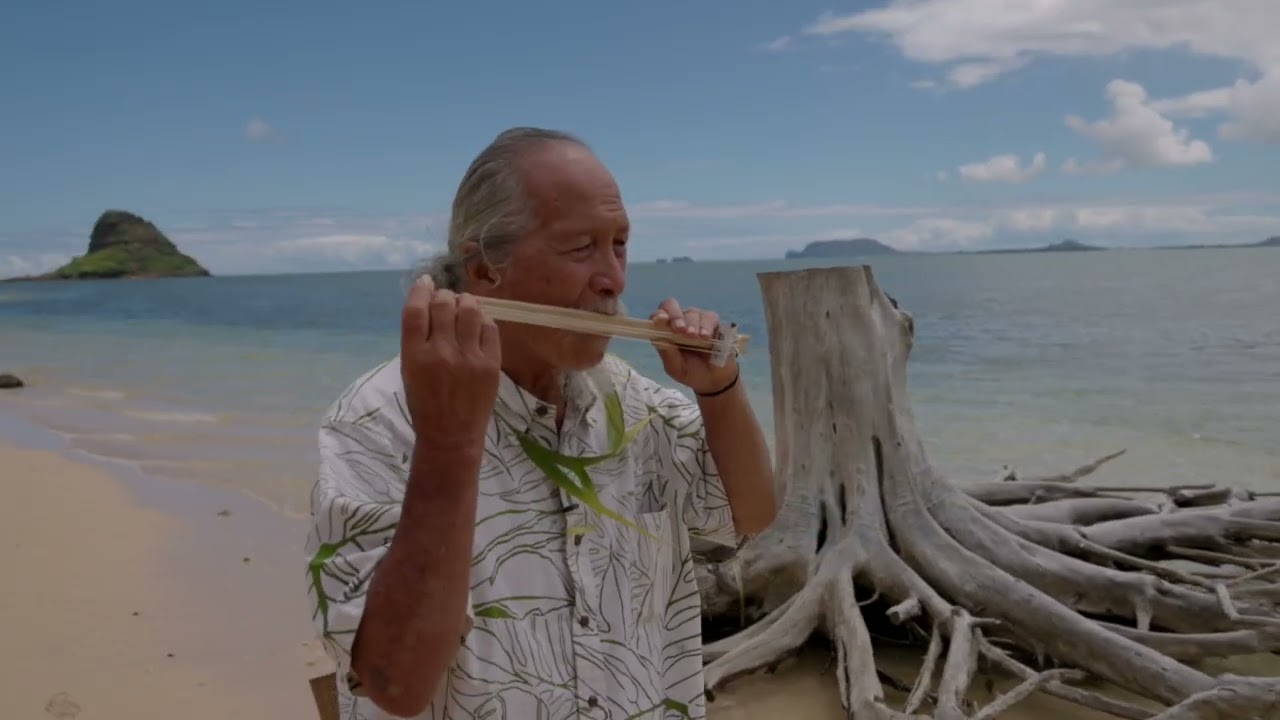
Hano: Made from bamboo trees in Hawaii, these flutes use the air from a musician’s nose to make sound and music.
Ukēkē: Made from a thin piece of wood that looks like bows used for hunting arrows, this instrument normally has one string that is plucked with a finger, while the bow is held on one end by the mouth to make the sound heard louder.
Poi: A traditional Hawaiian food made from the tarot plant, which grows from a long stem in tropical areas.
Hano (nose flute), ukēkē (mouth bow), and poi (food):
Hano: Made from bamboo trees in Hawaii, these flutes use the air from a musician’s nose to make sound and music.
Ukēkē: Made from a thin piece of wood that looks like bows used for hunting arrows, this instrument normally has one string that is plucked with a finger, while the bow is held on one end by the mouth to make the sound heard louder.
Poi: A traditional Hawaiian food made from the tarot plant, which grows from a long stem in tropical areas.
Uncle Calvin Hoe grew up in O’ahu Hawaii...»
Uncle Calvin Hoe grew up in O’ahu Hawaii. From the time he was in high school, he started making his own instruments out of the nature where he lived. He is now considered one of Hawaii’s greatest Native crafters. His expertise is making instruments that were found in Hawaii before non-Native’s came to the islands. When outsiders began settling in Hawaii, they brought with them disease that nearly destroyed the Native population. Uncle Calvin continues the tradition of making instruments that existed in Hawaii long before European settlers arrived on the island—this work connects him to his place, people and language.
Uncle Calvin Hoe grew up in O’ahu Hawaii. From the time he was in high school, he started making his own instruments out of the nature where he lived. He is now considered one of Hawaii’s greatest Native crafters. His expertise is making instruments that were found in Hawaii before non-Native’s came to the islands. When outsiders began settling in Hawaii, they brought with them disease that nearly destroyed the Native population. Uncle Calvin continues the tradition of making instruments that existed in Hawaii long before European settlers arrived on the island—this work connects him to his place, people and language.
Hawaii is a set of Islands located in the Pacific Ocean settled in the 10th century by voyagers from far away Polynesian Islands who traveled by boat using the stars to guide them...»
Hawaii is a set of Islands located in the Pacific Ocean settled in the 10th century by voyagers from far away Polynesian Islands who traveled by boat using the stars to guide them. O’ahu is one of the islands of Hawaii, known for its full vegetation and beautiful nature along the coast. The significance and beauty of this area has been passed down generations through oral tradition, often described as a paradise. Hakipu`u, or “broken hill,” refers to the jagged top of the area’s high points.
Hawaii is a set of Islands located in the Pacific Ocean settled in the 10th century by voyagers from far away Polynesian Islands who traveled by boat using the stars to guide them. O’ahu is one of the islands of Hawaii, known for its full vegetation and beautiful nature along the coast. The significance and beauty of this area has been passed down generations through oral tradition, often described as a paradise. Hakipu`u, or “broken hill,” refers to the jagged top of the area’s high points.
After viewing Uncle Calvin’s video, before showing it to your class...»
After viewing Uncle Calvin’s video, before showing it to your class:
After viewing Uncle Calvin’s video, before showing it to your class:
Students watch accompanying video about the artist.
In a small group of 2-4 classmates, share your answers to these questions:
Think of 3 questions you want to ask Uncle Calvin Hoe.
Brainstorm and share out as a class:
What materials are instruments made from that you’ve seen or played? Think of each part of the instrument and what natural material it comes from.
Uncle Cal makes instruments like the ones you thought of above, but his are made from common plants found near his home. Think about the world outside your window. What could you use to make an instrument that you find outside? Come up with a list of objects and what sort of sounds you think each object would make.
Have the class go outside, (or use the classroom objects if outdoors is not possible), or have students use the outdoor space around their homes to complete this activity.
Journal answers to the following questions as you think about your life, home, and community:
Uncle Calvin talked about how much people use technology, computers and hard drives today, and how we often forget the importance of our community’s shared memory. Discuss with your classmates:
Write a thank you card for Uncle Calvin—be sure to include something personal about yourself and how it connects to him and his music.
As a small group, discuss what you learned about the Hawaiian food and musical tradition through this activity with Uncle Calvin. Using a computer, research more about Hawaiian music and answer these questions:
Students watch accompanying video about the artist.
In a small group of 2-4 classmates, share your answers to these questions:
Think of 3 questions you want to ask Uncle Calvin Hoe.
Brainstorm and share out as a class:
What materials are instruments made from that you’ve seen or played? Think of each part of the instrument and what natural material it comes from.
Uncle Cal makes instruments like the ones you thought of above, but his are made from common plants found near his home. Think about the world outside your window. What could you use to make an instrument that you find outside? Come up with a list of objects and what sort of sounds you think each object would make.
Have the class go outside, (or use the classroom objects if outdoors is not possible), or have students use the outdoor space around their homes to complete this activity.
Journal answers to the following questions as you think about your life, home, and community:
Uncle Calvin talked about how much people use technology, computers and hard drives today, and how we often forget the importance of our community’s shared memory. Discuss with your classmates:
Write a thank you card for Uncle Calvin—be sure to include something personal about yourself and how it connects to him and his music.
As a small group, discuss what you learned about the Hawaiian food and musical tradition through this activity with Uncle Calvin. Using a computer, research more about Hawaiian music and answer these questions:

Describe how a narrator’s or speaker’s point of view influences how events are described.
Explain the relationships or interactions between two or more individuals, events, ideas, or concepts in a historical, scientific, or technical text based on specific information in the text.
Write informative/explanatory texts to examine a topic and convey ideas and information clearly.
Introduce a topic clearly, provide a general observation and focus, and group related information logically; include formatting (e.g., headings), illustrations, and multimedia when useful to aiding comprehension.
Engage effectively in a range of collaborative discussions (one-on-one, in groups, and teacher-led) with diverse partners on topics and texts, building on others’ ideas and expressing their own clearly.
Review the key ideas expressed and draw conclusions in light of information and knowledge gained from the discussions.
Compare and contrast the experience of reading a story, drama, or poem to listening to or viewing an audio, video, or live version of the text, including contrasting what they “see” and “hear” when reading the text to what they perceive when they listen or watch.
Determine the meaning of words and phrases as they are used in a text, including figurative, connotative, and technical meanings.
Conduct short research projects to answer a question, drawing on several sources and refocusing the inquiry when appropriate.
Engage effectively in a range of collaborative discussions (one-on-one, in groups, and teacher-led) with diverse partners on topics and texts, building on others’ ideas and expressing their own clearly.
Review the key ideas expressed and demonstrate understanding of multiple perspectives through reflection and paraphrasing.
Interpret information presented in diverse media and formats (e.g., visually, quantitatively, orally) and explain how it contributes to a topic, text, or issue under study.
Include multimedia components (e.g., graphics, images, music, sound) and visual displays in presentations to clarify information.